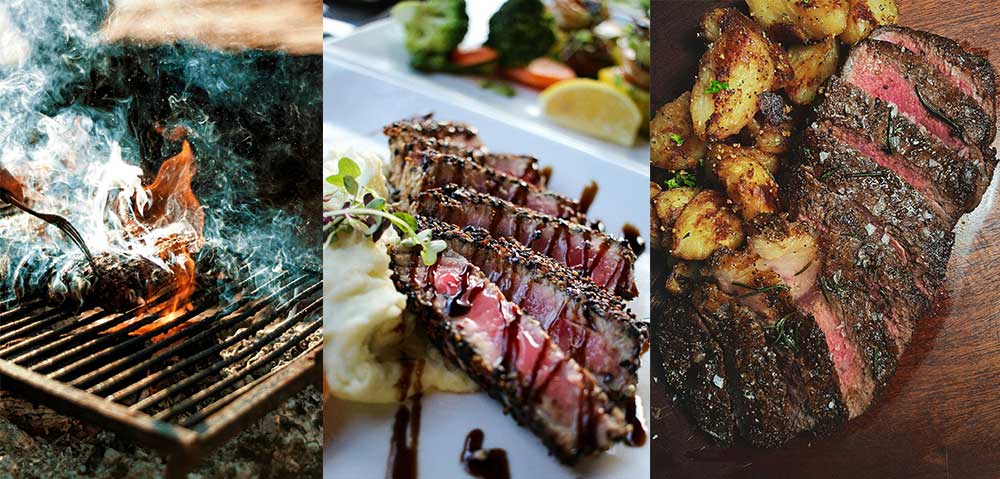
Let’s Meat: Preparation Advice for Red Meat
Another scorching summer has eased off, bringing relief and beautifully balmy weather with some cool evenings. The change in weather allows you to light a fire, fire up the gas braai, or switch on your oven without getting hot and bothered. And with this being said, here are some meat mastering tips for you.
Whether we’re talking about cows, lambs, or pigs, there are three major areas, or cuts, that meat comes from: the shoulders and legs (or shanks), the loin and ribs (or middle area), and the haunches (back thighs and legs). These main cuts break down into smaller cuts – too many and diverse to mention individually – but the area where the meat comes from tells you a lot about how to cook it, and how it will taste.
Legs, shoulders and back legs/haunches tend to be tougher but more flavourful, since they’re doing more work and getting more exercise.
The loin and ribs tend to be much more tender (filet mignon comes from this area) but usually offer milder flavour.
Tender Cuts of Meat: Cook Fast!
Tender cuts from the back (loin) region are quick-cooking cuts. These are cuts like ribeye, sirloin, strip steak, pork chops, and tenderloin. They don’t need much cooking to make them taste awesome.
One of the best things you can do with cuts like this is to sear the outside of the meat over high heat, with a cast-iron pan or on a grill, and then continue cooking it just long enough to be safe to eat, but not so long that the proteins begin to seize up and the meat turns tough. This is why most chefs and restaurants tend to recommend steaks medium-rare over well done.
Tougher Cuts of Meat: Cook Slow.
Cuts from the shoulders and rear of the animal (beef chuck, round roast, pork shoulder, and pork butt among them) will taste dry and chewy if you don’t let them cook long enough — usually at least an hour or more. They’re often seared first, then braised or otherwise kept moist in a slow cooker, soup, or stew. The slow cooking might cause the meat to become slightly tougher in the very beginning, but over time the connective tissues break down and the meat becomes tender and delicious.
The Main Lesson
Any meat that you want to be delicious should be bravely, boldly, nearly recklessly seared, going for broke and riding a ragged edge between browned and burnt. Timid searing and browning is absolutely no good. You want a hit of HEAT on that meat. To do this, you want to do several things.
Make sure the meat is thoroughly dried. Water will keep the meat from getting hot enough as it touches the pan. If it’s not ground, pat it dry with a paper towel or clean dish towel.
Get the pan hot. Really hot. This doesn’t mean you need the highest flame — medium-high can work — but let the pan sit there for a little while, so it comes all the way up to an unflagging hot temperature.
Lastly, and potentially the trickiest step, let the meat cook totally undisturbed. Once the meat hits the pan, you should hear it sizzle. (If it doesn’t, remove it immediately — the pan is not hot enough.) Once that happens, give it a few minutes for the searing to actually take place and for the meat to darken and brown. Flip when the meat smells caramelised and dark — this is a place to use your nose. Caramelising adds all kinds of complicated flavours to the steak, but the important thing to note is that it makes the meat tasty. Nudge the meat with a spatula; if it sticks it probably hasn’t developed a good crust yet. When it releases cleanly, you’re getting there.
What You Don’t Need to Learn
Boneless top blade? Sirloin chop? Bottom round roast? There are more names for cuts of meat (beef, pork, or lamb) than anyone other than a trained butcher can keep track of. And, confusingly, some cuts go by several names. They’re not worth memorising. Instead, ask your butcher where, on the animal, the cut is coming from, and maybe ask for a recommendation on how to cook it.
Failing that, here’s a good rule of thumb: If it’s a smaller, thinner piece or has lots of marbling, cook it quickly on the stove. If it looks big enough to serve a crowd — or if you see lots of tough-looking chewy tissues — plan on roasting, braising, or slow-cooking it.
Meat Cooking Pro Tips
Dry Brining
Dry brining is a simple technique that can lead to ethereal results. Simply rub salt (and any herbs you want to use) into the meat and then place it on a rack (so air can circulate) on the bottom shelf of a fridge for several hours, and up to a day or two. This achieves three important things: The salt draws out juices from the meat, which then reabsorb the (now salty) juice, so the seasoning isn’t just on the surface. The salt also breaks down some of the proteins, tenderising the meat. And, finally, the cool air dries out the surface of the meat and, as we noted above, this helps create a superior sear.
Testing for Doneness
The last thing you want, especially when pan-searing or grilling a steak, is overcooked meat. But some folks are squeamish about undercooked meat and you don’t want to be constantly cutting into a steak to see how pink it is in the middle. What’s a cook to do?
You have two options. The first (and frankly, the safest) is to invest in a good meat thermometer. The internal temperature for any meat besides chicken should be at least 63°C (yes, even for pork). At this temperature, steak will be done medium-well. A medium-rare steak is only about 52°C internally.
If you’re somehow without a thermometer, try the finger test, which involves pressing on the steak and comparing the firmness to the fleshy part of your hand under your thumb, when your thumb is touching each of the other four fingers on your hand.
Slicing and Serving
Finally, when slicing up a steak to serve it (on a salad, for instance) or simply to eat, try noticing the grain of the steak — the direction in which the muscle tissue runs — and then cut perpendicular across the grain, so you’ve got lots of short fibres, and not parallel along the grain. This will help the meat fall apart as you chew, making it taste more tender and less chewy.
A nonstick skillet won’t work well for searing steak. A cast iron pan works best.
Tongs are also particularly useful for flipping a steak or chop.
A cooling rack that fits into a sheet pan will help dry-brine meats.
Alternatively, you could be completely chilled and let the Granny Mouse Country House & Spa chefs do it all for you in the idyllic KwaZulu-Natal Midlands, alongside Lions River. “Granny Mouse has a heritage spanning over 30 years, award-winning cuisine and wine, and elegant accommodation options” says GM Sean Granger, “but we pride ourselves more on our ethos of being a home-away-from-home.”
For meat dishes that melt in your mouth, make your booking today by emailing: reservations@grannymouse.co.za