Edible Landscapes: Gardens that Feed
Growing edible plants is a sustained gardening trend with more and more gardeners joining the field every year. This has spawned several trends, one of which is foodscaping- landscaping with edible plants.
Foodscaping argues for the removal of the traditional vegetable garden, with rows and rows of planting that take up tons of space and resources and contrast heavily from the more decorative and aesthetically pleasing planting of ornamental gardens. Instead, foodscaping principles advocate for combining the two, seamlessly mixing edible plants into your existing landscaping design to create a foraging garden that looks as good as it tastes.
The Best Edible Plants to Choose:
Berries
In colder regions of South Africa, the wide range of berry plants make wonderful choices. Blueberries, raspberries and other similar plants produce lush foliage in large shrubs that are great for lining fences or separating garden zones. They form an edible hedge, producing an abundance of food for your family and for the families of birds in your area.
Natal Plum
If your climate doesn’t get cool enough to grow berries, you can instead opt for the Natal Plum as your edible hedge. These plants develop long and sharp thorns with dense foliage, making them ideal hedges for both privacy and security. They are also beloved by local birds and bugs.
Nasturtiums
An existing veggie garden staple, nasturtiums are known for their ability to draw away common pests like aphids, acting as a trap crop. These plants are also great groundcovers, spreading incredibly quickly and covering soil with their large leaves and colourful flowers. Their peppery flavour makes them a perfect addition to salads and you can also eat the seeds as a snack known as ‘poor man’s capers’.
Mint
Mint is both loved and hated by gardeners everywhere. This plant devours garden resources, spreads incredibly quickly, and does not play nice with any nearby plants. However, these characteristics are also what makes them such great foodscaping plants. Mint is the ideal lawn replacement or ground cover, covering entire empty patches of soil with greenery in no time. There are also many hybrids with interesting flavours to choose from, from pineapple to chocolate.
Lavender
One of the most popular perennials in South Africa and around the world, no garden is complete without at least one lavender plant. Although they are favoured for their amazing scent, soft purple flowers and ability to attract pollinators, lavender is also edible – a great fragrant herb for sweet desserts and teas.
Pansies
Edible flowers add a pop of colour to your salad or cakes and to your gardens. When choosing the ideal edible flower, you certainly can’t go wrong with pansies. Available in a wide range of colours, these plants are suitable for interplanting in ornamental beds, lining pathways, or growing in containers or hanging baskets on patios.
We also have a treasure trove of edible and medicinal plants within our rich plant kingdom in South Africa. Planting these indigenous edibles into your garden gives you easy access to fresh flavours that, at the same time, can handle our harsh South African climate as they are water-wise and easier to maintain than your classic herb or veg. The local birds, bees and insects will be grateful, too.
Here are some of our favourites:
1. Pelargonium culallatum (wild malva)
This showy pelargonium grows to a height of one metre and flowers beautifully in post-fire years. It grows best in a sunny position in well-drained soil and looks best if pruned after flowering to prevent it from getting leggy.
2. Pelargonium tomentosum (peppermint-scented pelargonium)
A shady position, compost and a bit of water in summer will keep this fast-growing pelargonium happy. One plant can cover 0.75m².
3. Coleonema pulchellum (confetti bush)
Known as false buchu, this lovely shrub grows to one metre or more in height and width. They like well-drained soil and a bit of compost, and they prefer a sunny position, although they do tolerate light shade. As with all fynbos, a mulch of compost or bark is beneficial as it keeps the shallow root system cool. It responds well to pruning.
4. Oxalis pes-caprae (wild sorrel)
We all take this lovely spring flower for granted. It occurs naturally in the Western Cape and doesn’t have to be planted. It regrows from little underground corms as soon as the rains start. It responds well to a bit of compost and a sunny position, although a bit of shade doesn’t stop them from flowering. They die down at the end of spring.
5. Artemesia afra (African wormwood)
This hardy shrub has delicate-looking foliage and can be used effectively in a herbaceous border. It is easy to grow, drought resistant and responds well to being composted. It should be pruned hard after flowering to keep it looking good.
6. Carissa macrocarpa (num-num)
This reasonably slow-growing summer rainfall coastal shrub grows best in nutrient-rich soil. It is often used as a windbreak or a security hedge plant but also stands very well on its own. It is drought-resistant and grows up to two metres. The num-num has lovely white flowers in spring and summer, followed by delicious fruit.
7. Tulbachia violacea (wild garlic)
This excellent border plant has bluish-green leaves. It flowers profusely if watered through the summer months with attractive mauve flowers. It is easy to grow and is reported to keep moles away. It occurs naturally along the south coast.
8. Jasminum multipartitum (many-petalled jasmine)
This plant has two forms – a scrambling shrub and a creeper. Both have beautifully scented large white jasmine flowers with a pink reverse from August to November. They are naturally widespread in summer rainfall areas. They will grow in sun or semi-shade and can tolerate wind.
9. Carpobrotus edulis (sour figs)
This fast-growing succulent ground-cover flowers from August to October. The large flowers are yellow but turn pink with age. It is widespread in the southwestern Cape, where it is used as a pioneer plant to hold banks and exposed sand.
10. Mentha longifolia (balderjan)
This easy-to-grow herb is found naturally from the Cape to Lesotho. It grows in damp areas in sun and light shade.
11. Salvia africana lutea (aromatic sage)
It is a hardy coastal shrub and grows in sandy coastal soils. It forms a good windbreak and is an excellent pioneer plant. It is covered in orange blooms with darker bracts in the early spring.
12. Agathosma apiclata (garlic buchu)
This metre-high, hardy shrub grows in coastal dunes and limestone soils of the Southern Cape, giving the ‘holiday’ smell to the Knysna area. It prefers a sunny position and is covered in white flowers in late winter.
A Source of Inspiration in the Midlands
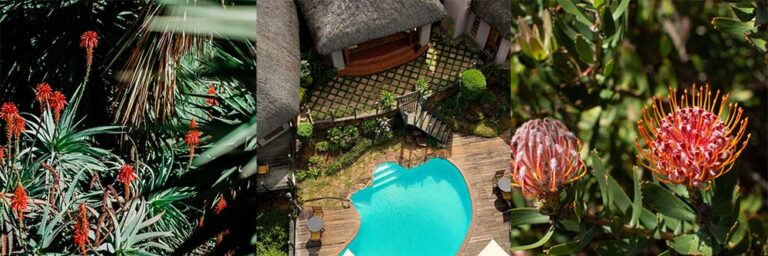
The idea of a garden often begins with a simple spark — a moment of peace in nature, a craving for fresh produce or a desire to connect more deeply with one’s neighbours. At Granny Mouse Country House & Spa, in the heart of the KwaZulu-Natal Midlands, that spark is nurtured every day. Surrounded by flourishing greenery, manicured beds and the gentle rhythm of nature, guests are immersed in the kind of environment that fosters reflection, creativity and a renewed connection with the earth.
According to General Manager Sean Granger, many guests leave inspired to create similar spaces. “There’s something powerful about seeing what’s possible when people invest time and care into a green space. Our gardens often serve as a blueprint — a living example of what can be achieved when nature, inspiration and effort come together.”
The tranquil, purposeful landscapes at Granny Mouse offer more than inspiration — they represent a tangible vision of what’s possible.
To experience the inspiration first-hand or to begin planning your garden journey, contact reservations@grannymouse.co.za